

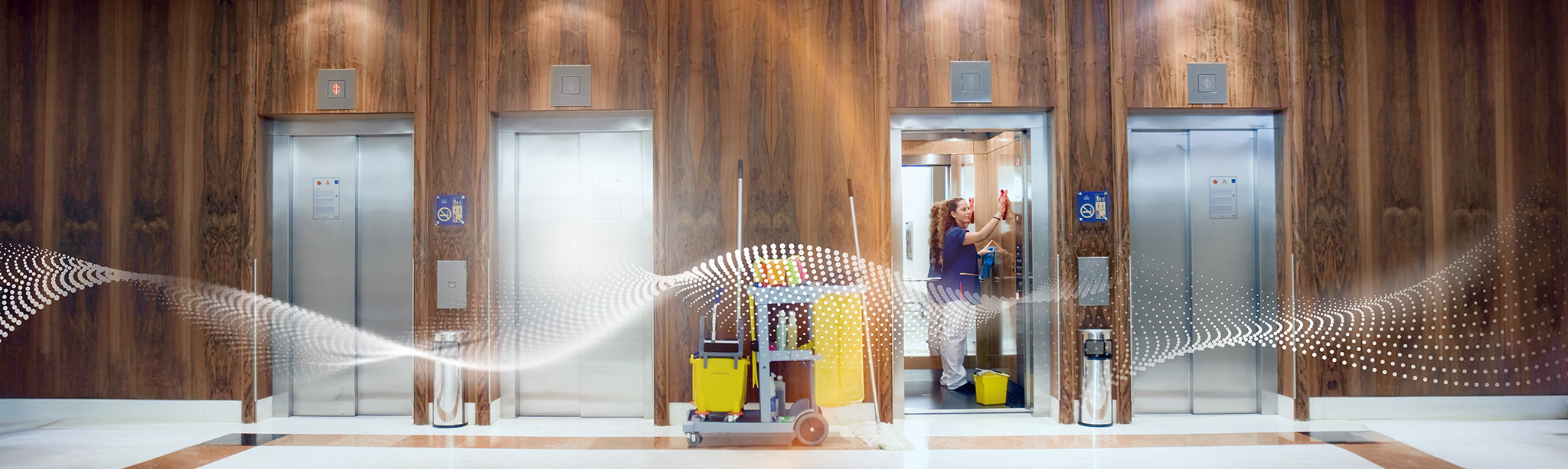
Demand-Based Cleaning
Our sensors tell you when it’s time to clean
We all appreciate clean working areas and hygienic restrooms in public buildings. In most cases, buildings are being cleaned following a certain schedule every week. But is that the most efficient way and does this get all areas as clean as possible? We think that we can do better!
For that, we actually need to know how frequently desks, meeting rooms and restrooms are being used, because there is a huge difference in cleaning a room that’s used daily to one that’s used only once every two weeks but is cleaned every week nonetheless. It’s the same with restrooms in an airport, for example: if there are no flights, the restrooms don’t need to be cleaned over and over, but once a plane has landed and been used by a lot of people, cleaning is a must!
It’s key that we don’t stick to strict cleaning patterns and instead focus on demand-based cleaning – with the help of our wireless radio sensors and digital solutions from our partners. The sensors tell us how often desks and meeting rooms are being used, if soap dispensers have gone empty, or how many people have visited the restrooms.
This data also enables predictive cleaning: spotting usage patterns over time so cleaning teams can plan ahead instead of just reacting. Send your cleaning team into a building when cleaning is actually necessary, to ensure a hygienic, clean area so that people feel comfortable all the way!
Use case – Smart Restroom at Beijing Airport
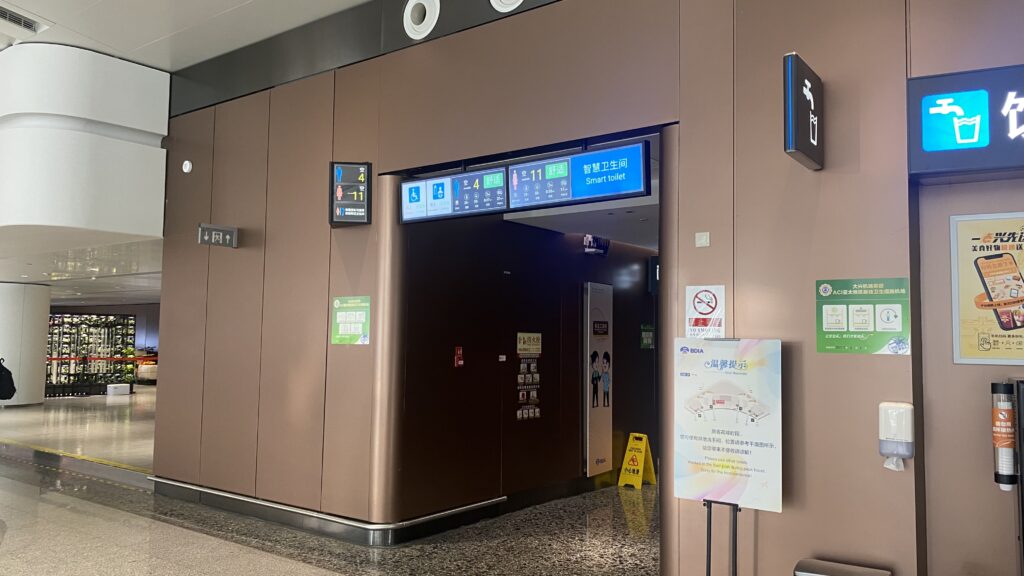
Beijing Daxing Airport launched “smart restrooms” built by Nanjing WinShine, using EnOcean’s battery-free wireless sensors (80% powered by motion-harvested energy).
The system covers stall occupancy sensing with light indicators, supply-level alerts for soap/paper towels, odor-based environmental monitoring, and traveler feedback — all feeding real-time data to cleaning staff while cutting maintenance overhead since no batteries are needed.