
Empowering Schools to Save Energy with Battery-Free Smart Control
December 8, 2025
In recent years, skyrocketing electricity costs have put increasing pressure on school budgets in Japan. In large schools, air conditioning alone can account for up to 40% of total electricity consumption, making it one of the biggest operational burdens.
At the same time, global initiatives such as the COP28 Global Cooling Pledge have reinforced the need to reduce carbon emissions. Educational institutions now face a dual challenge — cutting energy use while still maintaining a comfortable, healthy learning environment for students.
A Battery-Free Energy Management System
To tackle these issues, Nifco Corporation launched a pilot project in several public schools in Yokosuka City, developing an innovative energy-saving IoT solution powered by battery-free EnOcean technology based on energy harvesting.
Each classroom was equipped with wireless, maintenance-free sensors that collect data on temperature, humidity, light levels, and occupancy. This real-time data integrates with smart remotes to automatically optimize air conditioner operations. Thus it ensures that cooling and heating are used only when and where they’re needed.
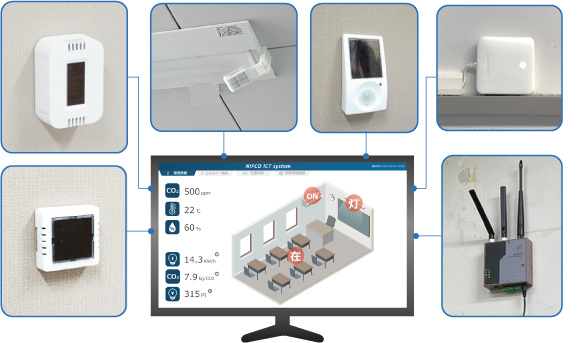
Caption: Wireless, maintenance-free sensors based on EnOcean technology were installed in each classroom
Because the devices are wireless and battery-free, installation required no rewiring or power downtime, allowing schools to continue normal operations during setup. This made deployment quick, simple, and minimally disruptive to busy school environments.
Testing and Engagement
During the proof-of-concept phase, Nifco compared energy consumption in both occupied and unoccupied classrooms to evaluate the system’s real-world effectiveness.
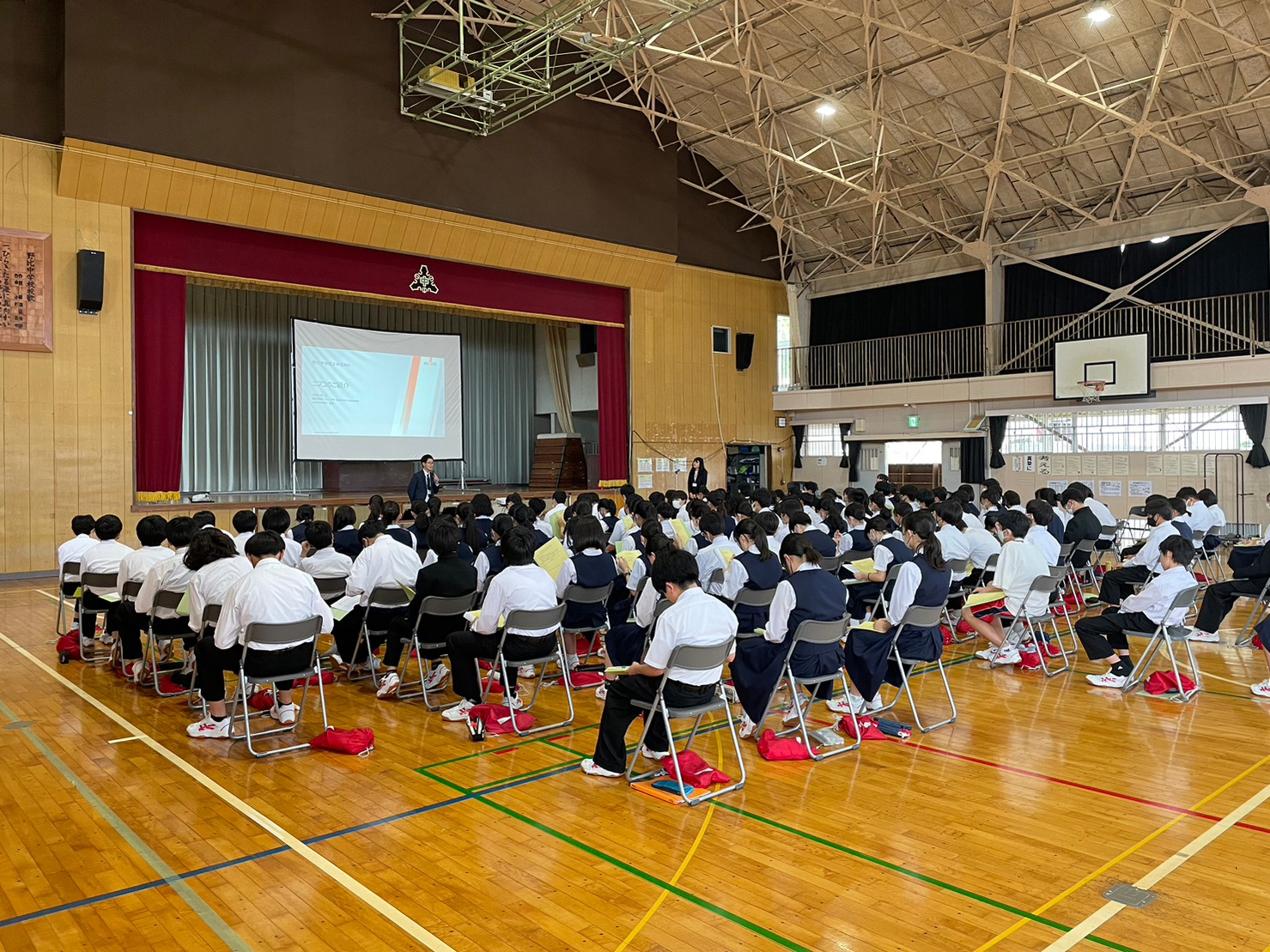
Beyond the technical pilot, the project also served an educational purpose. Students were introduced to the concept of battery-free sensors and their role in reducing energy use and CO₂ emissions. The hope is that this initiative will inspire greater environmental awareness among the next generation.
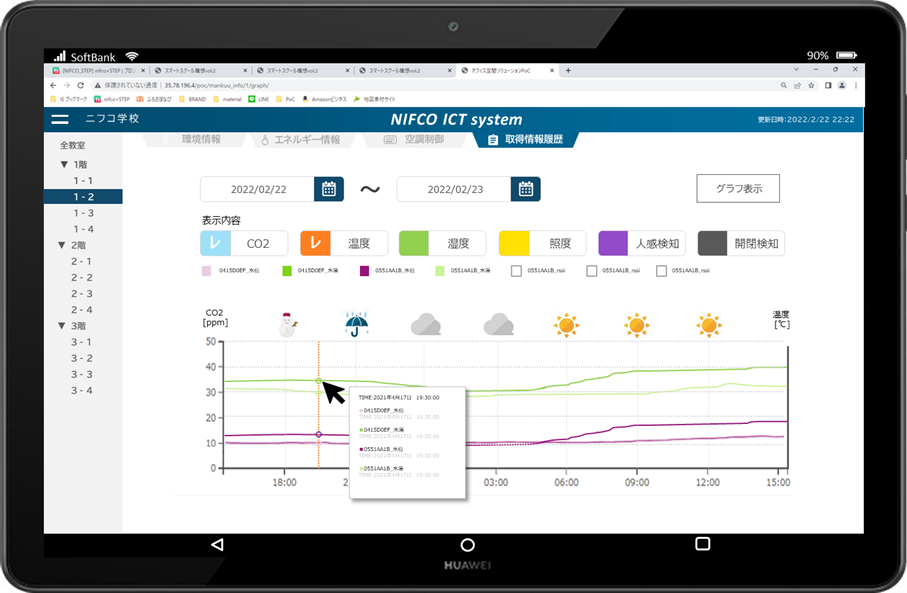
Caption: The Nifco ICT system visualizes indoor air quality and environmental metrics and helps compare classrooms.
Benefits and Results
- Energy Efficiency: Optimized air conditioning reduced unnecessary power use and costs.
- Ease of Installation: Battery-free, wireless devices enabled smooth retrofitting without disrupting classes.
- Transparency: The system provides real-time visibility into electricity use and costs, allowing daily, monthly, and yearly comparisons.
- Sustainability: Contributes to carbon emission reduction goals in line with global climate initiatives.
- Educational Impact: Encourages students to engage with sustainability and energy management topics.
Next Steps
In fiscal year 2024, the project expanded to four public schools in Yokosuka City to validate its scalability and energy-saving impact under real operational conditions. Nifco aims to extend the system to schools using both infrared and centralized air-conditioning systems. This helps municipalities and educators lighten their operational and environmental load.
By combining smart control and battery-free sensing, Nifco continues to create schools that are not only more energy-efficient, but also healthier and more sustainable for students, teachers, and the planet.
